Medication reminders
Set reminders against the schedule provided by the treating team. Update them when instructions change.
Home recovery support / Singapore
Discharge papers explain the care plan. They can't prepare the flat for a difficult first night. K. S. Sembawang Digital Care Pte Ltd helps families set up post-hospital care at home in Singapore, with temporary monitoring, reminders and clear caregiver updates.
It supports daily living and family awareness. Medical advice and nursing care stay with the professionals who know your parent's case.
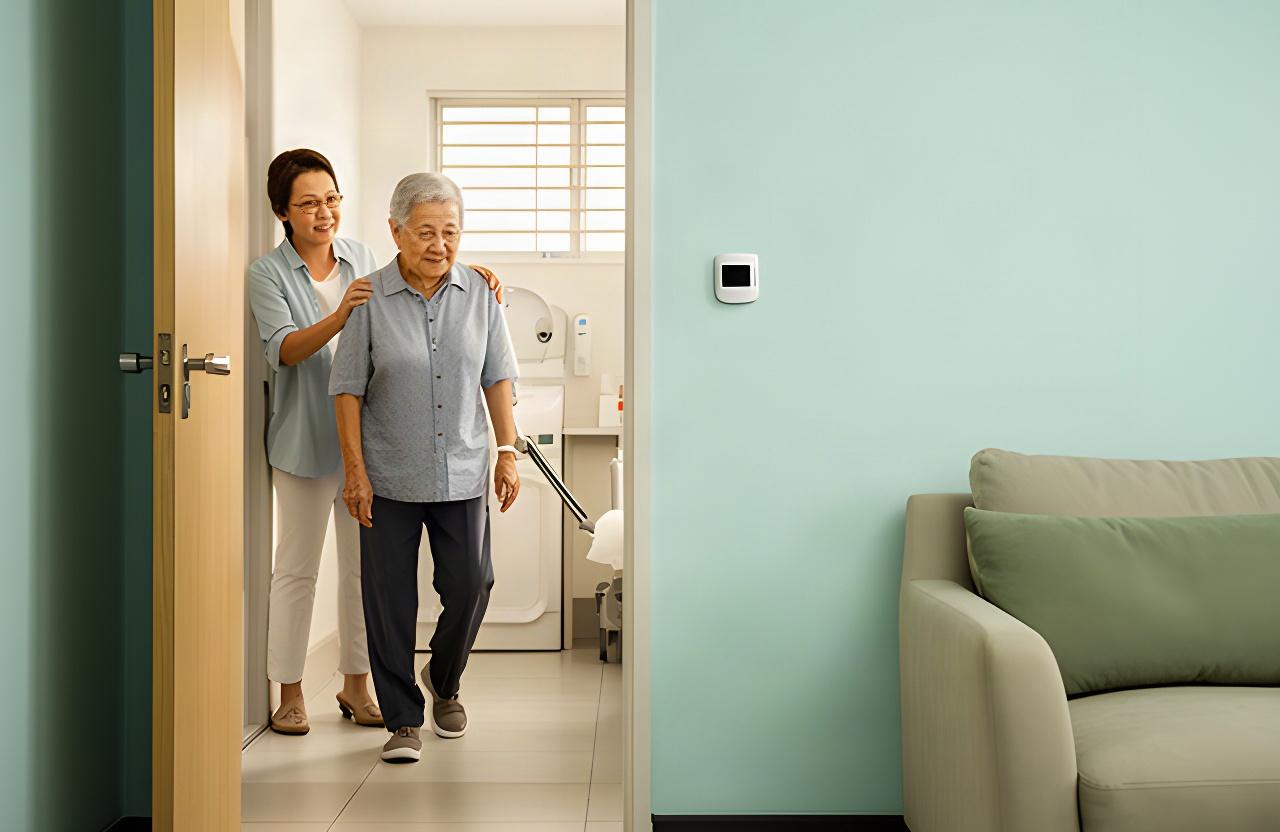
First-night priorities
A clear route from bed to bathroom. Reminders within reach.
01 / Observe patterns
Room-level movement patterns can help a family notice changes in walking range, time out of bed and nighttime activity. Use the weekly view as context for a follow-up conversation.
Patterns, not diagnoses.
Daytime movement: see room-to-room activity at a broad level.
Night activity: spot changes in overnight movement routines.
Weekly context: share a pattern view with the care team if your family chooses.
Example trend view
Example display only. It does not represent a person or predict a clinical outcome.
01 / Compare
Look at activity against your parent's earlier weeks.
02 / Notice
Write down a change that concerns the family.
03 / Discuss
Bring observations to the next appointment.
02 / Keep care in sync
A hip or knee operation can leave several people helping at different times. Put the daily plan and handover notes where the family can keep them straight.
Shared care log
Physio routine marked complete
Updated by the morning caregiver.
Follow-up appointment confirmed
Family members can see the same note.
Afternoon check-in assigned
The next available caregiver takes the handover.
Example entries for display. Follow the discharge plan and the current prescription.
Set reminders against the schedule provided by the treating team. Update them when instructions change.
Keep appointment times visible to the family member arranging transport or attending.
Shared notes reduce repeated calls about what has already been handled today. Set the primary alert contact to the caregiver most likely to respond.
Everyone sees the same update.
03 / Prepare the flat
Small changes can make the first trip to the bathroom less awkward. Check the route, access and device placement with your parent's mobility needs in mind.
Start with the route.
0 of 5 checks marked ready
Three-room flat / planning sketch
Route review
Check lighting, clear floor space and sensor positions against the actual flat. This sketch is a planning aid, not a building plan.
Care boundaries
This service supports daily routines, household awareness and family coordination. It does not provide clinical treatment, assess recovery or replace a doctor, nurse or physiotherapist. Follow the discharge instructions and advice from your parent's care team.
Call emergency services when needed.
04 / Choose a stage
Start with the expected discharge date, hospital guidance and a basic flat layout. We can discuss a temporary arrangement or support that continues as routines change.
Option A / Recovery period
Set up monitoring and reminders for the early weeks, then review what can be scaled back as mobility changes.
Option B / Longer-term routine
Keep selected alerts and family coordination in place after the initial recovery period, based on the household's needs.
Before discharge day
Discuss timing, movement monitoring in your HDB flat and a setup that follows the care team's instructions. No long commitment is needed to start the conversation.
Start before discharge.